
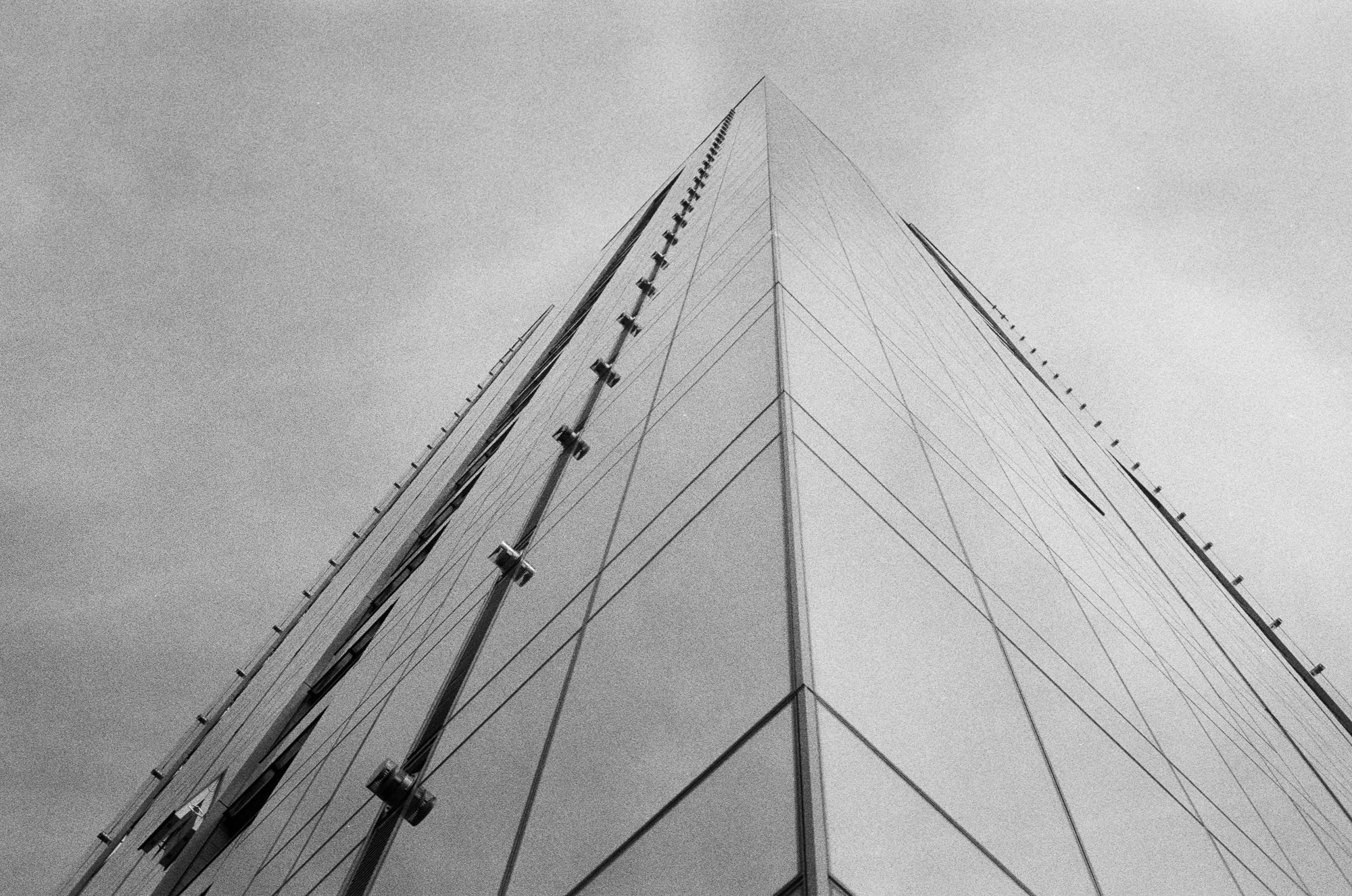
There is a peculiar feeling that sometimes follows me home after spending an evening among strangers. I can have a wonderful time, enjoy the conversations, laugh, connect with people, and feel completely like myself. Yet afterward, something shifts. I find myself wondering whether I was somehow putting on an act.
It's a strange feeling, because I know I wasn't pretending. I was genuinely interested, genuinely engaged, and entirely myself. So why, once the evening is over, does it sometimes feel like I was being someone I'm not?
Recently, I attended a lecture exploring classical architecture and design. Architecture has always fascinated me, and I was looking forward to an interesting evening of learning, meeting new people, and enjoying conversations about something I've always found intriguing.
Traffic had other plans.
The drive took a little longer than expected, but what surprised me was discovering that the lecture had started about fifteen minutes early. By the time I walked in, everyone was already seated and listening.
There's always something a little awkward about entering a room when everyone is facing the doorway, especially when a presentation is underway. But I was warmly welcomed, assured it was perfectly fine, offered a glass of wine, and found an empty chair near the front.
I settled in, happy to have made it and looking forward to the evening.
The lecture was wonderful. The architect shared stories about his projects, his creative process, and the relationship between architecture and artistic expression. I was especially drawn to the sketches and watercolors he used to explore his ideas.
They reminded me of the expressive illustrations you sometimes see in haute couture, where a designer's sketches become artworks in their own right. There's something fascinating about seeing the early ideas behind a finished creation, especially when the drawings reveal so much of the artist's individual style.
Afterward, I had an opportunity to speak with him about his drawings. I was curious when he had begun sharing this more expressive side of his work with clients, particularly within a profession where established expectations can sometimes leave little room for individual interpretation.
He had been creating these expressive sketches for years, but what surprised me was how recently he'd begun sharing them with his clients.
Only about five years ago.
The evening was the final stop on his book tour, and he had copies available to purchase and sign. The book brought together roughly ten to twelve years of architectural projects and drawings.
When we spoke afterward, he admitted feeling a little embarrassed by how different some of his artwork appeared when collected in one place. His style had evolved over those years, and suddenly those variations were there together, page after page.
I found that fascinating.
Here was someone with an accomplished career, looking back at years of creative exploration and recognizing something that I think many artists wrestle with.
We're often led to believe that becoming established means developing a recognizable style. A visual language that eventually becomes distinctly our own. Yet the more artists I encounter, the more I notice how wonderfully varied their work can be. Different techniques, different approaches, different expressions, sometimes existing side by side.
I could identify with that feeling of looking back and wondering how all those different versions of our creative selves fit together.
And suddenly, something clicked.
Of course his work had changed.
We were talking about years of new experiences, curiosity, experimentation, and evolving perspectives. I found myself saying it aloud, almost at the same moment the realization was taking shape in my mind..
We're always changing. We're always growing.
Maybe the variations in our work aren't something we need to reconcile into a single, consistent style. Maybe they're something worth embracing.
Each one tells us something about where we were, what interested us, and how we were seeing the world at that particular moment.
And the story is still unfolding.
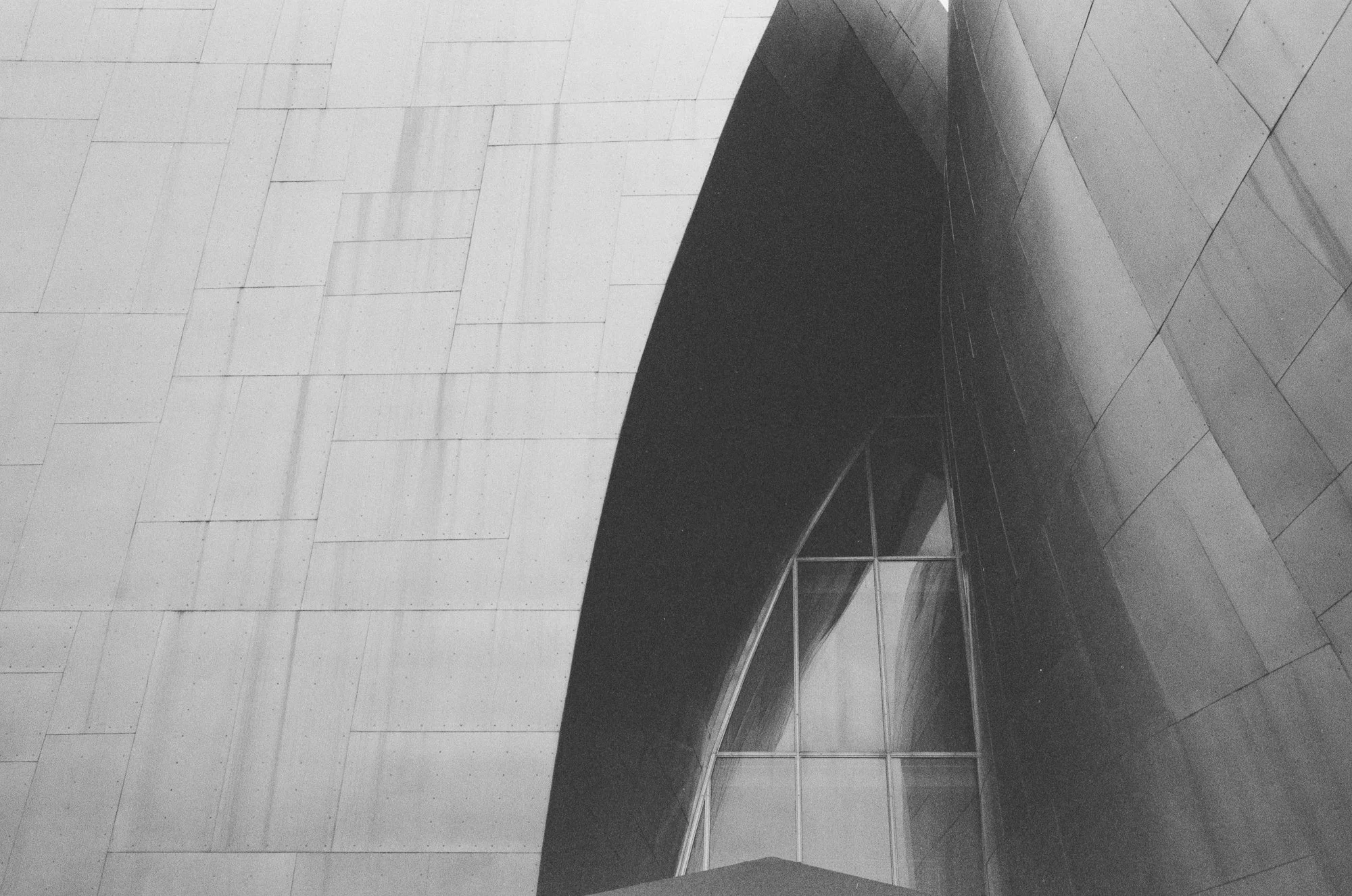
Architectural photographs © Angela Holm
Another conversation that evening brought me an entirely different kind of delight.
I've developed a fascination with Brutalist architecture and have been imagining a photographic project exploring its monumental forms, raw materials, and striking geometry.
I wasn't entirely sure how that enthusiasm would be received in a room full of architects gathered to celebrate classical architecture.
Architecture, much like photography, has its philosophies, preferences, and occasionally strong opinions about what deserves admiration. I wondered whether mentioning Brutalism might earn me a raised eyebrow.
Instead, I found enthusiasm.
One woman acknowledged that people can be quite dogmatic about architectural styles, but she shared my interest. Later, when I mentioned it to the speaker, his response was immediate and animated. He began describing a building in Paris that he thought I absolutely needed to see.
I loved that.
Here I was, surrounded by people I'd never met, suddenly talking about something that genuinely excites me with people who understood that excitement.
There's something wonderful about finding a shared curiosity in an unexpected place.
Throughout the evening, there were other conversations. A woman seated behind me struck up a conversation before I'd even left my chair. Later, I met one of the owners of the architecture firm where the event was being held. We discovered that we'd both grown up in Wisconsin, and before long we were exchanging memories of familiar places and neighborhoods.
Little points of connection, scattered throughout an evening among strangers.
I didn't leave with a pocketful of business cards or a calendar full of appointments. But that hadn't been my intention.
I'd gone because I was curious.
And I had genuinely enjoyed myself.
Yet somewhere on the way home, that familiar feeling returned.
Awkwardness.
Not because anything particularly awkward had happened. Not because I regretted something I'd said or wished I'd behaved differently.
Quite the opposite.
I had been entirely myself.
So why do I sometimes leave these situations with the strange feeling that I'd been performing, even when I knew I hadn't?
It's a feeling I've experienced before, but never really understood.
I've spent much of my creative life bringing people together, organizing gatherings, building communities, and welcoming people into unfamiliar spaces. When I'm the one hosting or leading something, my attention naturally turns toward everyone else. I want people to feel comfortable, included, and connected. There's an ease in that role, a sense of knowing where I fit.
But walking into someone else's established community is different.
I'm no stranger to meeting new people, and I genuinely enjoy it. Yet when I'm the newcomer, I don't have that familiar role to settle into. People already have histories together, familiar conversations, and an understanding of one another that I haven't yet developed.
I'm simply new.
And I began to wonder whether the awkwardness I'd been feeling had less to do with confidence and more to do with belonging.
Perhaps I was comfortable being myself, but not yet comfortable with my place in the room.
That distinction stayed with me.
Belonging isn't necessarily something that happens the moment we arrive somewhere. It grows through shared experiences, familiar faces, and the small connections that accumulate over time.
I thought again about the architect's drawings.
He had spent years developing his artistic language, allowing it to change as he changed. What he saw as inconsistencies in his book, I saw as an honest record of growth.
And perhaps finding our way into a community isn't so different.
There are periods when we're exploring unfamiliar territory, creatively or personally. Sometimes we're experimenting with a new artistic direction. Sometimes we're discovering where we fit among people whose lives have been unfolding together long before we arrived.
Both require a willingness to be somewhere we haven't quite settled into yet.
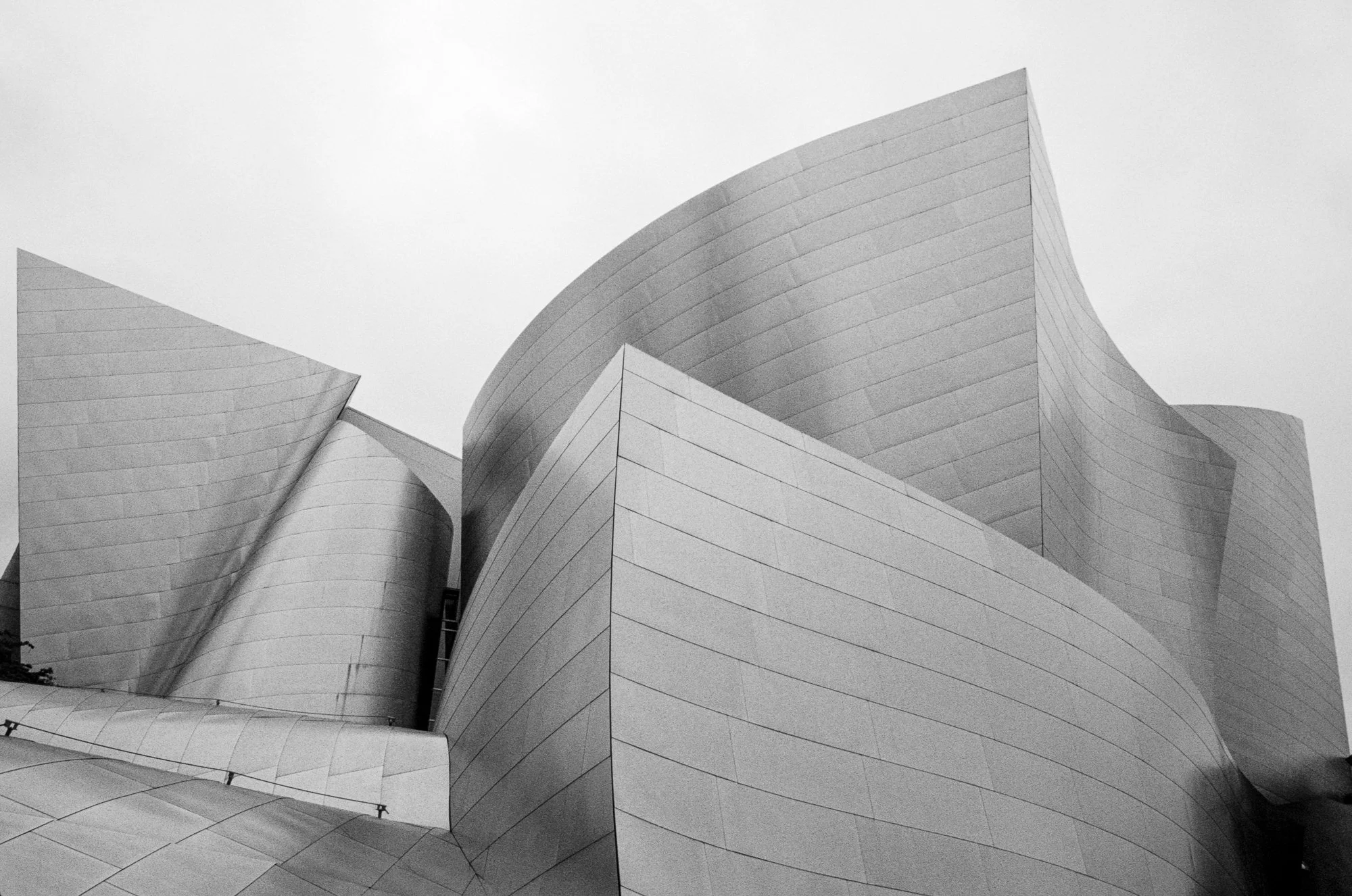
Architectural photographs © Angela Holm
I think about how many times I've been the newcomer, and how some of those unfamiliar places eventually became communities where I felt completely at home. Places where, over time, I became the one welcoming someone else.
There was no single moment when that transformation happened.
It came through showing up, participating, and allowing relationships to develop in their own time.
I went to an architecture lecture hoping to learn something, enjoy an interesting evening, and meet a few people.
I came home thinking about artistic evolution, the pleasure of shared curiosity, and a feeling I'd experienced many times but had never quite understood.
Maybe the most interesting discovery of the evening wasn't about architecture at all.
It was recognizing that I can be entirely comfortable with who I am, even when I haven't yet found where I belong.